

A business can have a great website, active marketing campaigns, and a strong sales team, but growth becomes difficult when these pieces work separately. Customers may discover your business through search, visit your website, interact with your content, and then receive a completely different message from your sales team.
A customer journey strategy helps connect these experiences. Instead of treating your website, marketing, and sales as separate activities, you can create a clear path that guides potential customers from their first interaction to becoming a customer and, eventually, a repeat customer.
What Is a Customer Journey Strategy?
A customer journey strategy is a plan for understanding and improving the different steps a customer takes when interacting with your business.
The journey can begin with a Google search, social media post, online advertisement, referral, or blog article. From there, the customer may visit your website, compare services, read reviews, submit a form, speak with your team, and make a purchase.
The goal is to connect every stage and make it useful.
A strong strategy considers:
- What customers need at each stage
- What information they are looking for
- Which marketing channel reaches them
- What action you want them to take
- How sales should follow up
- How you continue the relationship after the sale
Start With Customer Journey Mapping
Before changing your marketing or website, create a customer journey mapping process. This helps you see the experience from the customer’s perspective rather than from the company’s perspective.
Start by identifying the major stages:
1. Awareness
At this stage, customers may not know your business yet. They are searching for information, solutions, or answers to a problem.
Your website content, SEO, social media, and other marketing channels should help them find useful information.
Flashlight Agency’s SEO services in Palm Desert can support this stage by improving organic visibility and attracting relevant website visitors.
2. Consideration
Once customers know about your business, they start comparing their options. They may visit service pages, read blog posts, check reviews, or look for evidence that your company understands their needs.
This is where useful content becomes important. A strong content marketing strategy can provide educational resources that answer customer questions and support buying decisions.
3. Conversion
At the conversion stage, the customer is ready to take action. That might mean requesting a quote, booking a consultation, calling your business, or completing a purchase.
Your website should make this step simple.
Clear calls to action, easy-to-use forms, straightforward service information, trust signals, and mobile-friendly pages can reduce unnecessary friction.
Flashlight’s website management services in Palm Desert focus on creating and maintaining websites that support business goals and conversions.
4. Retention
The journey does not end when someone becomes a customer. Follow-up emails, helpful content, customer support, and ongoing communication can encourage repeat business.
This is where marketing and sales need to stay connected. Customers should continue receiving relevant communication rather than being treated as a completed transaction.
Connect Marketing and Sales
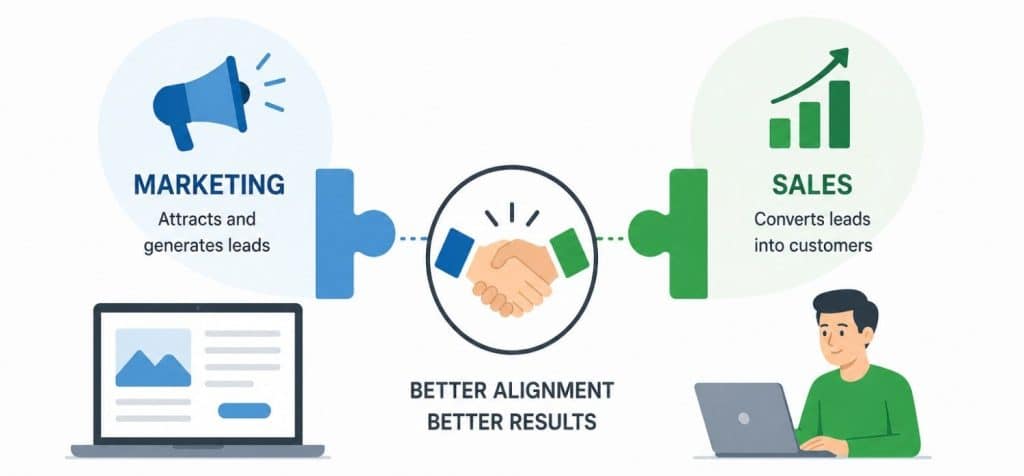
One of the biggest problems businesses face is poor marketing and sales alignment.
Marketing may generate leads, but sales may not know where those leads came from or what information they interacted with before making contact. This can result in repetitive conversations and missed opportunities.
To improve alignment, marketing and sales teams should agree on:
- What qualifies as a good lead
- Which information should be collected
- How quickly leads should receive a response
- Which campaigns generate the strongest leads
- What questions customers commonly ask
- Why prospects decide not to buy
This creates a smoother experience for both customers and employees.
Make Your Digital Customer Journey Consistent
A digital customer journey often includes several touchpoints. A customer might see a social media post, search for the company on Google, read a blog, visit a service page, and eventually contact the business.
Each touchpoint should communicate the same basic brand message.
Your website should support your marketing instead of operating separately from it. Your content should answer customer questions. Your calls to action should lead users toward the next logical step.
Flashlight Agency also provides digital marketing services to help businesses connect their online marketing activities with broader growth goals.
Measure and Improve the Journey
A customer journey strategy should not be something you create once and forget.
Review your performance regularly. Look at where visitors enter your website, which pages they view, where they leave, which campaigns generate leads, and how many leads eventually become customers.
If many visitors reach a service page but do not contact you, the page may need clearer messaging or a stronger call to action. If marketing generates leads that rarely convert, sales feedback can help identify the problem.
Small improvements across multiple stages can create a much stronger overall customer experience.
Ready to Build a Better Customer Journey?
Your website, marketing, and sales process should work together to turn visitors into qualified leads and long-term customers. Flashlight Agency can help you create a connected digital strategy that supports visibility, engagement, and business growth.
Call Flashlight Agency today at 1-760-469-9995 to discuss your goals and find the right strategy for your business.
Contact Flashlight Agency to schedule a consultation and take the next step toward a stronger customer journey.
Frequently Asked Questions
What is a customer journey strategy?
A customer journey strategy is a plan for understanding and improving every interaction a customer has with a business, from initial awareness through conversion and retention.
Why is customer journey mapping important?
Customer journey mapping helps businesses identify customer needs, confusing steps, missed opportunities, and points where potential customers may leave before converting.
How can a website improve the customer journey?
A website can improve the journey with clear navigation, useful content, strong calls to action, easy contact options, fast performance, and information that answers customers’ questions at different buying stages.
What is the difference between marketing and sales alignment and customer journey strategy?
Marketing and sales alignment focuses on making marketing and sales teams work together effectively. A customer journey strategy takes a broader view by connecting those teams with the website, content, customer experience, and post-purchase communication.
How often should a business review its customer journey?
Businesses should review their customer journey regularly, especially when launching new services, changing their website, introducing new marketing campaigns, or noticing changes in lead quality and conversions.