
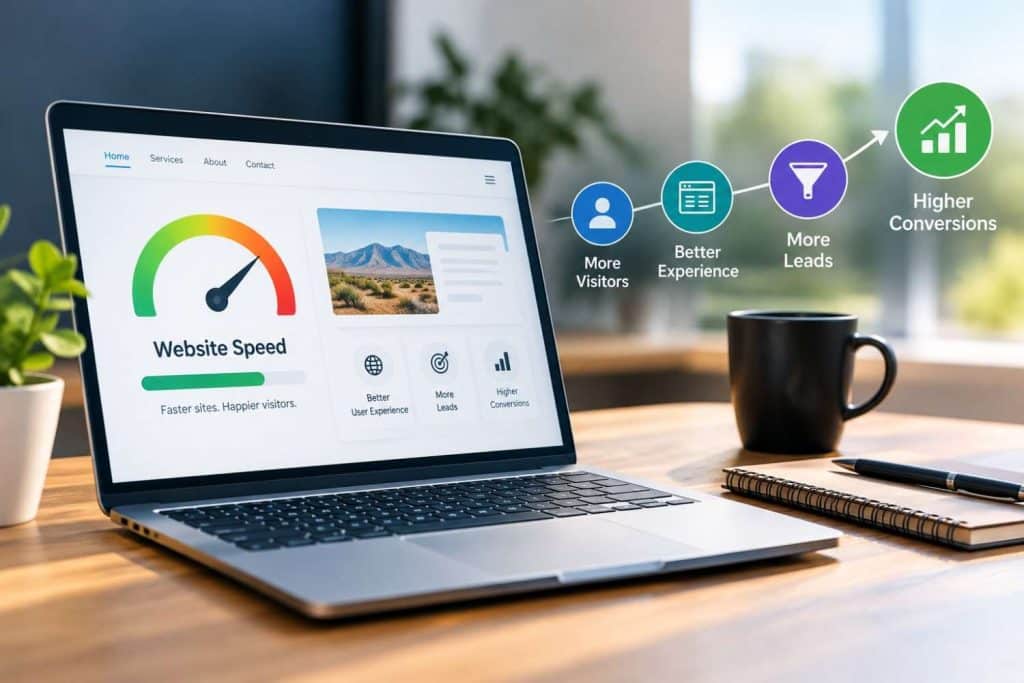
A business website can attract visitors through SEO, social media, advertising, referrals, and other marketing channels. But getting people to your website is only part of the process. Once visitors arrive, your website needs to give them a reason to stay, explore your services, and take the next step.
Website speed can play an important role in that process.
A slow website can make it harder for visitors to find information, complete a form, contact your business, or move from one page to another. Even if your marketing is bringing qualified traffic, a poor website experience can reduce the number of visitors who become leads.
Why Website Speed Matters for Lead Generation
Lead generation depends on what happens after someone lands on your website.
A potential customer might arrive on your homepage and then want to:
- Read about your services
- View pricing or project information
- Check reviews or testimonials
- Complete a contact form
- Request a quote
- Call your business
- Book a consultation
If pages take too long to load, visitors may leave before completing these actions.
This is particularly important for businesses investing in Digital Marketing in Palm Desert, SEO, paid advertising, or social media marketing. These strategies can bring visitors to your website, but your website still needs to turn that traffic into meaningful actions.
How a Slow Website Can Affect Conversions
Website speed can affect several parts of the customer journey.
1. Visitors May Leave Before Taking Action
People usually expect websites to respond quickly. If a page takes too long to load, visitors may return to the search results or move to another website.
For a service business, this can mean losing a potential phone call, enquiry, quote request, or consultation.
2. Slow Pages Can Create a Poor User Experience
Speed is not only a technical issue. It is part of the overall website experience.
Visitors should be able to move between your homepage, service pages, contact page, and other important content without unnecessary delays.
A website that feels slow can make the entire customer journey feel more difficult.
3. Mobile Visitors Can Be Especially Important
Many customers access business websites from smartphones.
A page that works well on a desktop computer may still feel slow or difficult to use on a mobile device. Large images, unnecessary scripts, poorly optimized code, and other technical issues can affect mobile performance.
Businesses should therefore check how their websites perform across different devices rather than focusing only on desktop users.
Website Speed and SEO
Website performance can also form part of a broader SEO services Palm Desert.
Search engines consider multiple factors when evaluating websites, including page experience and technical performance. However, improving speed should not be treated as a shortcut to higher rankings.
Your website still needs useful content, relevant pages, strong technical SEO, clear navigation, and a good experience for visitors.
Flashlight already discusses website performance and its relationship with SEO in its existing website-performance article, so this article focuses more specifically on what performance can mean for lead generation and conversions.
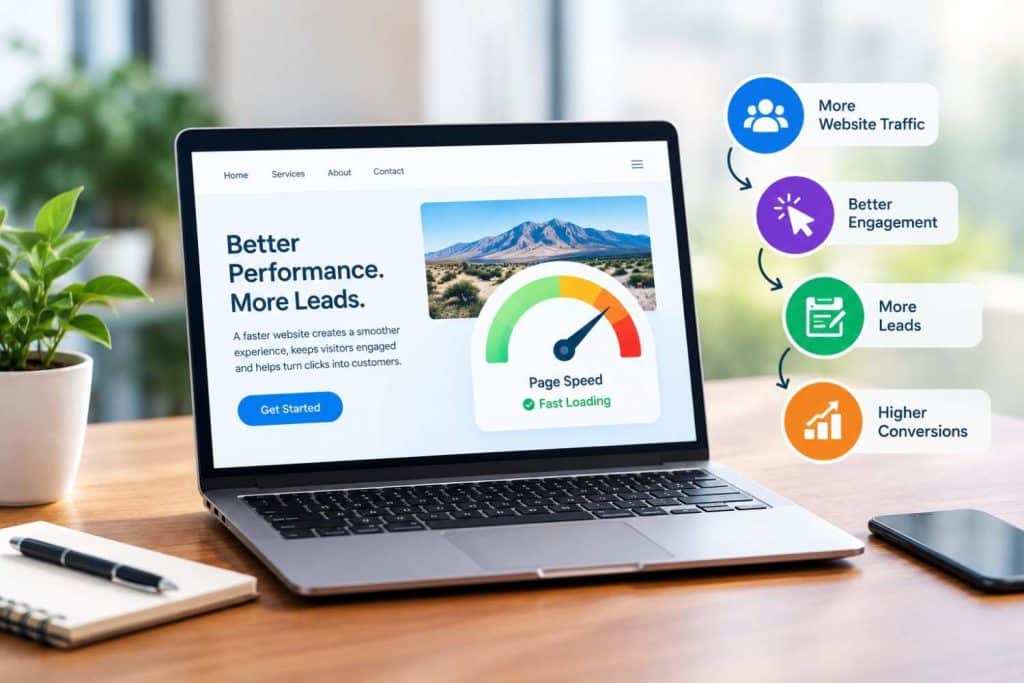
What Can Make a Website Slow?
Several factors can contribute to poor website performance, including:
- Large or uncompressed images
- Too many plugins
- Excessive JavaScript
- Unnecessary third-party scripts
- Poor hosting performance
- Outdated website software
- Bloated themes or code
- Lack of caching
- Poorly optimized media
The cause is not always obvious to a business owner. A website may look perfectly normal while technical issues are affecting how quickly pages load.
How to Improve Website Speed
The right solution depends on what is slowing the website down, but businesses can start with a few practical steps.
Optimize Images
Large image files can add unnecessary page weight. Compress images and use appropriate formats without reducing visual quality unnecessarily.
Review Plugins and Scripts
Remove unnecessary plugins, scripts, and integrations. Every additional element can potentially affect page performance.
Improve Hosting and Caching
Good hosting and appropriate caching can help pages load more efficiently. These areas should be reviewed as part of ongoing website management services in Palm Desert.
Test Mobile Performance
Do not rely only on desktop testing. Check important pages on mobile devices and identify areas that create delays or usability problems.
Monitor Performance Regularly
Website performance can change after adding new plugins, images, tracking tools, features, or website updates. Learn more about why monitoring website performance matters for SEO growth.
Regular monitoring helps identify problems before they become bigger issues.
Speed Is Only One Part of Conversion Optimization
A fast website does not automatically generate more leads.
Visitors also need clear service information, strong calls to action, simple navigation, trust signals, and an easy way to contact the business.
For example, a website could load quickly but still generate few enquiries if the contact form is difficult to find or the service information does not answer customer questions.
That is why website performance should be considered alongside website design in Palm Desert, content, SEO, and conversion strategy.
Flashlight’s Website Management services cover areas such as website performance, maintenance, security, content updates, and ongoing optimization.
How to Know If Website Speed Is Affecting Your Leads
Look beyond the speed score alone.
Track metrics and actions such as:
- Form submissions
- Phone calls
- Quote requests
- Consultation bookings
- Landing-page engagement
- Mobile versus desktop performance
- Pages where visitors leave
- Conversion rates from different traffic sources
If traffic is increasing but enquiries are not, reviewing the website experience can help identify where potential customers are dropping out.
Ready to Turn More Website Visitors Into Leads?
A fast website is an important part of a strong online presence, but it also needs to provide a clear and easy path for visitors to become customers. Flashlight Agency can help you improve your website’s performance, user experience, and overall digital strategy.
Contact Flashlight Agency today to discuss your website and find practical ways to improve its performance and lead generation.
Frequently Asked Questions
1. How does website speed affect lead generation?
A slow website can cause visitors to leave before they contact the business, submit a form, request a quote, or complete another conversion action.
2. Can website speed improve conversion rates?
Improving speed can create a better user experience and may help reduce friction during the customer journey. However, conversion rates also depend on factors such as content, design, offers, trust signals, and calls to action.
3. What makes a business website slow?
Common causes include large images, excessive plugins, third-party scripts, outdated software, poor hosting, and unoptimized website code.
4. Should I optimize my website for mobile speed?
Yes. Mobile performance should be part of website optimization because many potential customers use smartphones to research businesses and services.
5. How often should website performance be checked?
Performance should be monitored regularly, particularly after major website updates, plugin changes, redesigns, or the addition of new scripts and features.