
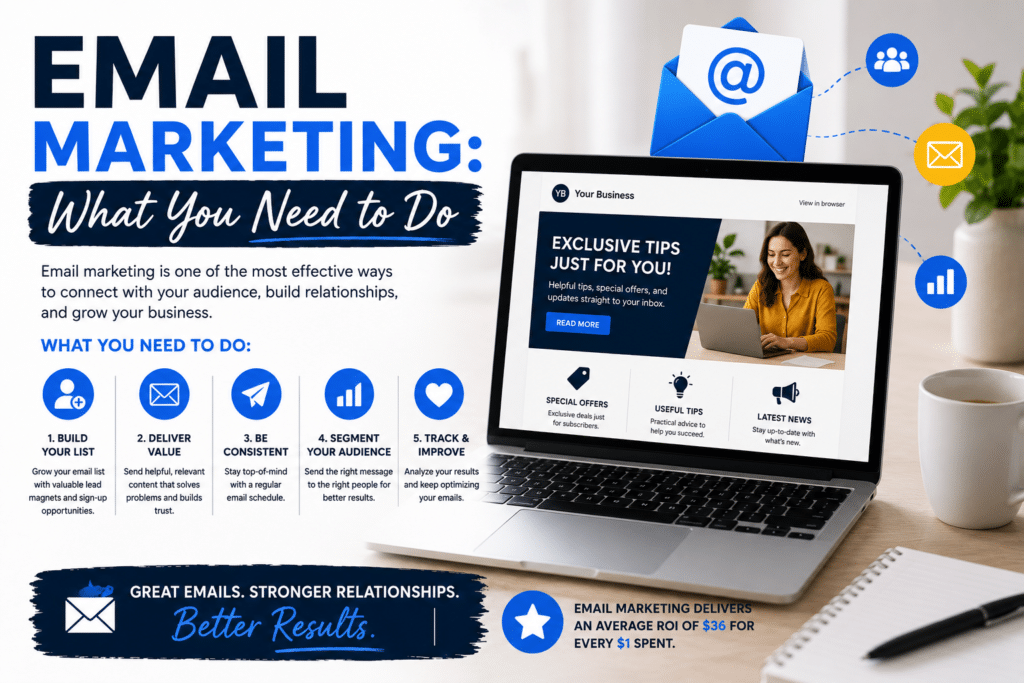
Email marketing is a simple way for businesses to stay connected with customers, nurture leads, and promote products or services. But sending emails alone is not enough. Your emails need to reach the right people, provide useful information, and give readers a clear reason to take action.
From building your email list to creating engaging content, using automation and tracking results, there are several steps that can make your email marketing more effective.
What Is Email Marketing?
Email marketing involves sending emails to people who have chosen to hear from your business. These emails can be used to share useful information, promote products or services, announce updates, nurture leads, or stay connected with existing customers.
A good email marketing strategy focuses on sending relevant content to the right audience at the right time. Instead of sending the same message to everyone, businesses can use customer interests, previous interactions, and engagement to make their emails more relevant.
How To Improve Email Deliverability
Getting your emails delivered is an important part of a successful email marketing strategy. Use permission-based lists and keep your subscriber database clean by removing or managing inactive addresses when appropriate.
You should also use proper email authentication, provide a clear unsubscribe option and avoid misleading subject lines or content.
Monitor important indicators such as bounces, spam complaints, and engagement. These can help you identify potential deliverability issues and improve your email practices over time.
Email Marketing – What You Need To Do
Build your list offline
While online promotion is essential, don’t overlook the opportunity to promote your mailing list offline. To build both new subscribers and potential clients, look for any opportunity possible to get the word out. Some great opportunities to build your business can be found at networking events, trade shows, conferences, and local gatherings.
Are your emails consistent?
Make sure your emails are consistent with any branding you have for your business. You should be including your company colors, logos, and anything else unique to your business in your emails. Customers should be able to recognize your emails when they arrive in their in-boxes so that they are not automatically deleted.
Use colors and fonts that reflect your business and are easy to view. Even if the content is interesting, difficult to read fonts and harsh colors can cause some customers to reject the email, and possibly future ones as well. Use the same color scheme and fonts for all of your emails.
Put real consideration into where you place links in your marketing newsletters. For example, you don’t want to send readers away from your email before you give them their call to action. You also don’t want to put your priority links at the end of an email where they may be overlooked.
Use Call to Actions
You should utilize some type of call to action within your emails. This tells your recipients directly in the email what they should do. If you have links, make them obvious and include the instructions on how they should be used. You can echo these parts in both the bottom and top part of your message.
Try following up an email to your customers with a notice that tells them not to procrastinate. Insert a suggestion that tells them to purchase now onto the reply. The ending could tell them not to miss this incredible opportunity by waiting. Instead, they should act now to reap the full benefits.
Stand Out From the Crowd

Build your own custom templates. Avoid just sending out generic emails, be creative with them. Try to get your messages to reflect aspects of your business’s branding, such as color palettes and fonts. If you include any images, make sure you include a link to a plain text version so that those with images disabled can read your messages.
Let customers know what to expect from the get-go. When a new subscriber opts in, send an immediate confirmation email that details what the customer can expect to receive from you and how often you will send emails. Filling customers in upfront can prevent future opt-outs and complaints and keep subscribers active.
Ask for Expert Email Help
What worked for you before might not work for you the next time around. That is why it is vital to always look into new email marketing strategies, and constantly seek new advice from experts like us here at Flashlight Marketing. Learn from others in your business niche, and always try out new methods to add to your arsenal of what works for your business.
One way to keep your email readers engaged is to ask them questions. These should not be rhetorical questions, either. Provide a feedback channel they can use to send you answers. You could ask for direct replies via email, or send your readers to your social networking pages. However, you arrange it, asking for two-way communication is a great way to cultivate loyalty in your subscribers.

Don’t underestimate the power of stories
Use your email marketing campaign to offer customers a personal perspective of your business. Tell a story about how you got started and why you are passionate about your business while giving them a special promotion or offer. It will build trust in your clients and make them more apt to make a purchase from you.
Get permission from individuals before you send any e-mail to them. Never send out e-mails to people without their consent. Unsolicited e-mails in a person’s inbox can easily be considered spam. You don’t want marketing to annoy people. Make sure you get permission before you turn off any potential customers.
Watch for these warning signs
Take precautions to avoid having your email flagged as spam by major internet service providers. Many ISPs have strict security measures in place to detect spam before it is delivered to a client. These spam filters determine if an email is spam by relying on specific criteria.
If an email displays too many of these indications, it is deemed to be spam and automatically deleted. These criteria include the use of words such as “discount”, “save,” and “free” in both the subject line and content of an email. Although it may seem difficult to eliminate these words, there are creative ways to capture the attention of your customers and make them aware of your promotions through email without setting off any spam filter alarms. It’s better to have an email reach your customers without these words than to risk having it not reach your customers at all.
Conclusion- Email Marketing – What You Need To Do
You will have found the answer to many of your questions here, so take what you’ve learned and implement it into a successful email marketing campaign. If you have further questions, please feel free to contact us and we will be happy to help you out.
Your rewards will be worth it in the end!
Frequently Asked Questions
What is email marketing?
Email marketing is the practice of sending marketing, informational or relationship-building emails to people who have chosen to receive communications from a business. It can be used to nurture leads, promote products or services, share updates and maintain customer relationships.
How do I start email marketing?
Start by defining your goals, choosing an email marketing platform and building a permission-based email list. Then create useful email content that is relevant to your audience and include a clear call to action.
How do I build an email marketing list?
You can build an email list through website signup forms, newsletters, downloadable resources, contact forms, events and other relevant customer interactions. Always make sure people understand what they are signing up for.
How often should I send marketing emails?
There is no single frequency that works for every business. Your sending schedule should depend on your audience, the type of content you provide and your marketing goals. Focus on sending useful content consistently rather than sending emails simply to maintain a schedule.
What types of emails should businesses send?
Businesses can use welcome emails, newsletters, promotional campaigns, post-purchase emails, educational content, product or service updates and re-engagement campaigns. The right mix depends on your audience and business goals.
How can I improve email engagement?
Start by sending relevant content to the right audience. Segment your list, write clear subject lines, use strong calls to action, optimise emails for mobile devices, and test different elements of your campaigns.
How can I improve email deliverability?
Use permission-based email lists, maintain accurate subscriber data, authenticate your sending domain, provide an easy unsubscribe option, and monitor bounces, complaints, and engagement. Avoid misleading recipients and regularly review your sending practices.
FREE Email Writing Cheat Sheet
Use the fill-in-the-blank templates to create any or all of your emails moving forward. We also give you some tips on what to write and what to avoid!
